Jurat vs Acknowledgment: Key Differences (2026)
Jurat vs Acknowledgment: When to Use Each One
Jurats and acknowledgments are the two most frequently performed notarial acts in the United States. They look similar on paper and are easy to confuse, but they serve distinctly different legal purposes. Using the wrong one can invalidate a document, delay a transaction, or create legal complications for the signer.
This guide explains exactly what makes these two acts different, when each one is required, and how to determine which to use when the document is ambiguous.
The Fundamental Difference
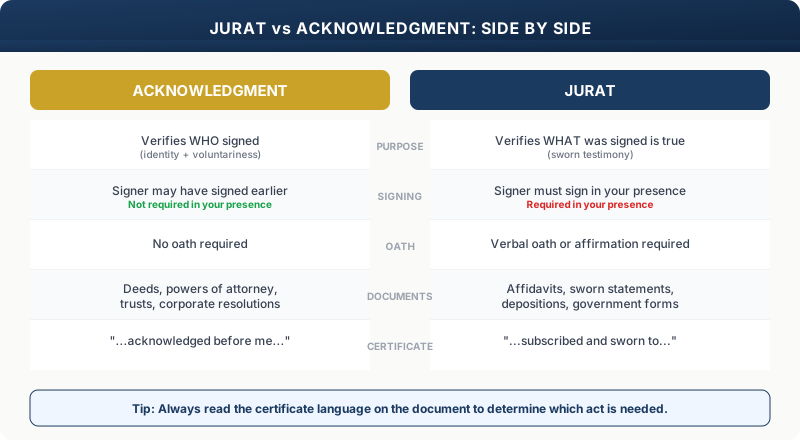
The core distinction is simple. An acknowledgment confirms that the signer appeared before you, that the signature on the document is theirs, and that they signed voluntarily. The signer does not need to sign in your presence; they may have signed the document earlier.
A jurat requires the signer to sign (or affirm they signed) the document in your presence, and then you administer an oath or affirmation that the contents of the document are true and correct. A jurat involves sworn testimony; an acknowledgment does not.
Think of it this way: an acknowledgment verifies who signed the document. A jurat verifies that the signer believes what they signed is true.
When to Use an Acknowledgment
Acknowledgments are the default notarial act for most legal and business documents. They are typically required when the document will be recorded in public records, when the receiving party needs to verify the signer's identity, or when state law specifically calls for an acknowledgment.
Common documents that require acknowledgments include real estate deeds, powers of attorney, trust documents, corporate resolutions, and many financial instruments. Recording offices generally require acknowledgments because they provide assurance that the person who signed the document is who they claim to be.
When to Use a Jurat
Jurats are required when the truthfulness of the document's contents matters legally. The oath or affirmation administered during a jurat means the signer can face perjury charges if the contents are false.
Common documents that require jurats include affidavits, sworn statements, depositions, certain government forms, financial disclosures under oath, and immigration documents. Any document that contains language such as "subscribed and sworn to" or "under penalty of perjury" typically requires a jurat.
How to Tell Which One a Document Needs
Check the notarial certificate. Most documents come with a printed notarial certificate at the bottom or as a separate page. Read the language carefully. Acknowledgment certificates say things like "personally appeared before me and acknowledged." Jurat certificates say "subscribed and sworn to before me" or "affirmed before me."
Look at the document's instructions. Some documents explicitly state which notarial act is required in the body text or in the instructions to the signer.
When in doubt, ask the issuing party. If the document has no certificate and no instructions, contact the person or organization that requires the notarization. They will know which act they need. Never guess, as the consequences of using the wrong act can be significant.
Do not choose for the signer. As a notary, you cannot advise the signer on which notarial act to use. That would constitute the unauthorized practice of law. You can explain the difference between the two acts, but the decision must come from the signer or the party requiring the document.
Performing Each Act: A Comparison
Acknowledgment process: The signer appears before you and presents identification. You verify their identity. The signer confirms the signature is theirs and was made voluntarily. You complete and sign the acknowledgment certificate and affix your seal.
Jurat process: The signer appears before you and presents identification. You verify their identity. The signer signs the document in your presence (or you confirm they just signed it). You administer an oath or affirmation: "Do you swear (or affirm) that the statements in this document are true and correct?" The signer responds affirmatively. You complete and sign the jurat certificate and affix your seal.
Mistakes to Avoid
Administering an oath for an acknowledgment. If the certificate calls for an acknowledgment, do not ask the signer to swear to the truthfulness of the document. That oversteps the scope of an acknowledgment.
Skipping the oath for a jurat. The oath is not optional. A jurat without an oath is incomplete and potentially invalid. Some notaries rush through this step, but the verbal oath or affirmation is a legal requirement.
Letting the signer sign before appearing for a jurat. For a jurat, the signer must sign in your presence. If the document is already signed when the signer arrives, they must sign again in front of you or you must perform an acknowledgment instead.
Crossing out and changing the certificate type. While some states allow notaries to attach a separate certificate if the printed one is incorrect, crossing out "jurat" and writing "acknowledgment" (or vice versa) on the existing certificate is generally unacceptable and looks unprofessional.
State Specific Variations
While the general principles above apply nationwide, there are state specific nuances you need to be aware of. Some states have different oath wording requirements. Some states mandate specific jurat certificate language. A few states require additional steps for certain document types.
For example, California requires a specific statutory acknowledgment certificate and has strict rules about credible witnesses. Texas has its own certificate wording and requires notaries to include their commission expiration date. Florida prohibits notaries from using personal knowledge as the sole basis for identification in jurats.
How Notary Guide Helps
Notary Guide eliminates the guesswork by providing step by step instructions for both jurats and acknowledgments in all 50 states. When you select the type of notarial act, the browser extension walks you through each required step for your commissioned state, including the correct certificate wording, identification requirements, and any state specific rules.
The extension flags potential issues in real time, like attempting to perform a jurat when the document certificate says acknowledgment, so you can catch errors before they happen.
Key Takeaways
Acknowledgments verify identity and voluntary signing; jurats involve sworn testimony about truthfulness. Always check the notarial certificate language to determine which act is required. Never skip the oath or affirmation when performing a jurat. For a jurat, the signer must sign in your presence. When the document is unclear, ask the issuing party and never guess or advise the signer.
Notary Guide provides state specific instructions for both acts across all 50 states. Try it free during the beta.