How to Start a Mobile Notary Business (2026)

Starting a Mobile Notary Business: Complete Guide
A mobile notary travels to the client's location, whether that is their home, office, hospital, or any convenient meeting point, rather than requiring the client to come to them. This convenience commands premium pricing and creates a flexible business that can be run part time or full time, with minimal startup costs.
Whether you are looking for a side hustle, a full time career change, or a way to supplement an existing notary practice, mobile notary work offers a clear path to earning income on your own schedule.
Why Mobile Notary Work?
The demand for mobile notaries is strong and growing. Real estate transactions, estate planning, legal proceedings, and healthcare situations all require notarized documents, and many of the people who need notarizations cannot easily travel to a notary's office.
Elderly signers, hospital patients, homebound individuals, busy professionals, and people in rural areas all prefer, or need, a notary who will come to them. This convenience gap is your business opportunity.
The startup costs are low compared to most businesses. You do not need a storefront, expensive equipment, or employees. Your primary investments are your notary commission, a reliable vehicle, basic supplies, and your time.
Getting Started: The Foundation
Step 1: Obtain your notary commission. If you are not already a commissioned notary, this is your first step. Requirements vary by state but generally include an application, a background check, an education course or exam (in some states), a filing fee, and a notary bond. The process typically takes two to six weeks.
Step 2: Get your supplies. At minimum, you need your official notary seal or stamp, a journal for recording your notarial acts, blue and black ink pens, a reliable vehicle, a phone for scheduling and navigation, and a professional bag or briefcase to carry your supplies.
Step 3: Understand your state's laws thoroughly. As a mobile notary, you will encounter a wider variety of documents and situations than an office based notary. You need a solid understanding of all the notarial acts authorized in your state, identification requirements, fee caps, journal requirements, and prohibited acts. This knowledge is your professional foundation and protects you from costly mistakes.
Setting Your Fees
Mobile notaries can typically charge more than office based notaries because of the convenience they provide. Your fee structure will generally have two components: a per signature notary fee (subject to your state's cap) and a travel or service fee.
The travel or service fee is where most of your income comes from. While the notary fee per signature may be capped at a modest amount, travel fees are either uncapped or subject to a much higher limit in most states.
Research what other mobile notaries in your area charge. Pricing varies significantly by market. Urban areas with more competition may have lower travel fees than rural areas where mobile notaries are scarce.
Be upfront about your fees. Quote them clearly when a client calls, and consider publishing your rate schedule on your website or business cards. Transparency builds trust and avoids uncomfortable conversations at the signing table.
Finding Clients
Building a steady client base is the most important part of establishing your mobile notary business. Here are the most effective channels.
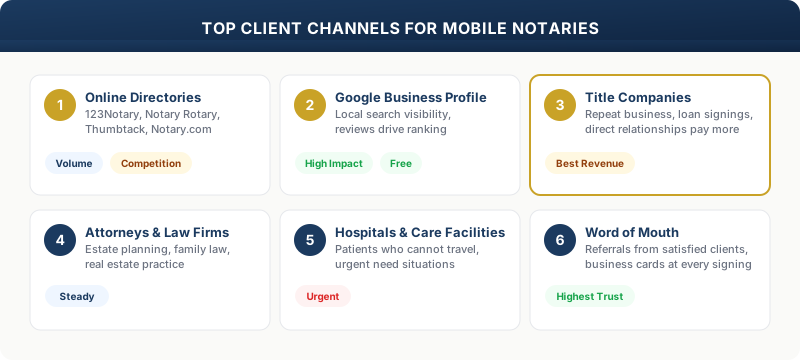
Online directories are where many people search when they need a notary. List your services on platforms like Notary.com, 123Notary, Notary Rotary, and Thumbtack. Complete your profiles thoroughly and keep them updated.
Google Business Profile is essential for local visibility. Create a Google Business Profile with your service area, hours, and contact information. Encourage satisfied clients to leave reviews, as positive reviews significantly impact your ranking in local search results.
Title companies and real estate agents are among the best sources of repeat business. Introduce yourself to local title companies, escrow officers, and real estate agents. Many title companies need reliable mobile notaries for loan signings, and a good relationship can provide steady work.
Attorneys and law firms frequently need documents notarized for their clients, especially in estate planning, family law, and real estate practice. Build relationships with local attorneys by offering reliable, professional service.
Hospitals and care facilities often need notary services for patients who cannot leave. Contact local hospitals, nursing homes, and assisted living facilities to let them know you are available for on site notarizations.
Word of mouth remains one of the most powerful marketing channels. Every satisfied client is a potential referral source. Carry business cards and leave them with every client after a signing.
Managing Your Schedule
Flexibility is one of the biggest advantages of mobile notary work, but it also requires discipline. Some practical tips for managing your time effectively:
Set clear availability hours and communicate them to clients. Decide whether you want to work evenings and weekends. These are high demand times that command premium pricing, but they also cut into personal time.
Build travel time into your schedule. Account for drive time between appointments, unexpected traffic, and the time it takes to complete each signing. Overbooking leads to late arrivals and stressed clients.
Use a scheduling tool or calendar system to track appointments, client information, and follow ups. Even a simple Google Calendar works well when you are starting out.
Group appointments by geographic area when possible. Scheduling multiple signings in the same part of town reduces drive time and increases your hourly earning rate.
Common Challenges and How to Handle Them
Last minute cancellations. Clients will cancel on you, sometimes at the last minute. Consider implementing a cancellation policy. For example, no charge for cancellations with 24 hours' notice, a partial fee for shorter notice. Communicate this policy upfront.
Signers who are not prepared. You will arrive at appointments to find that the signer does not have acceptable identification, the documents are not ready, or the signer does not understand what they are signing. Develop a standard pre appointment confirmation process where you remind the signer what to bring and what to expect.
Uncomfortable or unsafe locations. Mobile notary work takes you into private homes and unfamiliar locations. Trust your instincts. If a location feels unsafe, it is acceptable to suggest an alternative meeting place such as a coffee shop or library. Your safety comes first.
Scope of practice questions. Clients will ask you to do things outside your authority, such as notarizing a document without the signer present, giving legal advice, or certifying a copy of a vital record. Know your boundaries and be prepared to explain them politely but firmly.
Building for Growth
As your mobile notary business grows, you can expand in several directions. Adding loan signing agent capabilities (see our guide on becoming a notary signing agent) opens up real estate closings, which typically pay more per appointment. If your state authorizes remote online notarization, adding RON expands your reach beyond your immediate geographic area. Some mobile notaries eventually hire other notaries to handle overflow work, turning a solo practice into a small agency.
How Notary Guide Helps
Mobile notaries face a unique challenge: they encounter a wider variety of documents, situations, and (in multi state scenarios) compliance requirements than office based notaries. Notary Guide provides instant access to step by step compliance guides for all 14 notarial acts in all 50 states, directly in your browser.
The extension works offline, which is essential for mobile notaries who may not have reliable internet at every signing location. Whether you are at a client's kitchen table, a hospital room, or a rural property with no cell service, you have full access to your state's requirements, fee caps, certificate wording, and prohibited acts.
Key Takeaways
Mobile notary work offers flexible income with low startup costs. Invest time in understanding your state's notary laws, as this knowledge is your competitive advantage. Set transparent fees and communicate them upfront. Build your client base through online directories, direct relationships, and word of mouth. Manage your schedule carefully and group appointments geographically. Always prioritize your safety and your professional boundaries.
Get step by step compliance guidance for any signing situation with Notary Guide, free during the beta.